Shopping Cart
- New
Founded in 1927, SCA San Marcos is located in the town of Canena, in the heart of Jaén, a short distance from the World Heritage cities of Úbeda and Baeza.
MoreFounded in 1927, SCA San Marcos is located in the town of Canena, in the heart of Jaén, a short distance from the World Heritage cities of Úbeda and Baeza.
Canena forms part of the La Loma region, one of the world’s leading producers of high-quality extra virgin olive oil.
The San Marcos Cooperative in Canena comprises more than 700 members and farmers from olive-growing families with a long tradition passed down from generation to generation.
Since its inception, when milling was carried out using traditional presses, the cooperative has evolved to now boast modern facilities dedicated exclusively to the production and extraction of extra virgin olive oil, as well as its storage and preservation.
In the 21st century, they have a modern factory adapted to current needs. Their average production is 19,000,000 kg of olives and 4,000,000 kg of extra virgin olive oil.
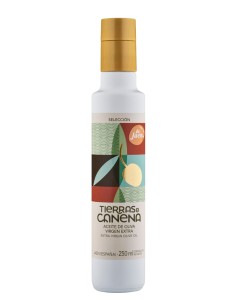
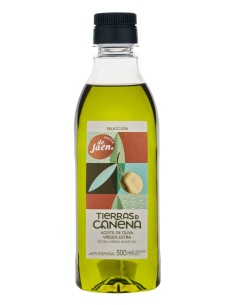
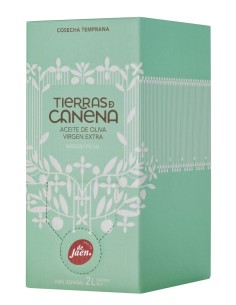
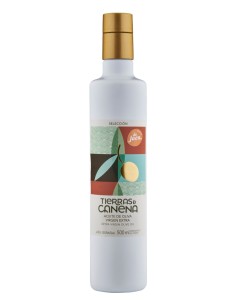
Under the Tierras de Canena brand, they produce extra virgin olive oil from the Picual variety using olives from their own groves, combining tradition and innovation to offer a product of the highest quality, paying close attention to every detail from the field to the bottle.
Set on undulating, clay-rich land, rich in the natural nutrients necessary for cultivation, their geographical location and climatic conditions mean that their oils combine the sweetness and smoothness of the lower Guadalquivir region with the aromatic intensity of the higher areas of Jaén.
At the San Marcos de Canena Cooperative, we have been committed to sustainability for years, through the adoption of Integrated Production, an environmentally friendly farming system that limits the use of plant protection products and promotes the rational management of natural resources. This model promotes the protection and improvement of the environment, encouraging practices such as the maintenance of vegetation cover, which is key to the conservation of native biodiversity.
In line with their commitment to sustainability and energy efficiency, they have commissioned a 50.40 kWp solar photovoltaic system for self-consumption. Located on the roof of the reception area and covering an approximate surface area of 800 m², this system delivers significant energy savings, achieving over 75% self-sufficiency in certain months. This investment also contributes to a significant reduction in CO₂ emissions into the atmosphere, estimated at around 44,000 kg per year, thereby reinforcing the cooperative’s commitment to a more sustainable and responsible production model.
In turn, they process and market olive pits, which, once cleaned and dried, are used as biofuel in domestic stoves and biomass boilers for heating and domestic hot water. The cooperative has also implemented a fertigation system in collaboration with the irrigation community, which allows, under technical supervision, the reuse of wastewater as a fertiliser resource. Added to this is the recovery of olive grove by-products, such as pruning waste, and the return of leaves, branches and plant debris to the fields to improve soil fertility.
This commitment to sustainability is complemented by support for social initiatives and projects aimed at rural development and the protection of biodiversity.
Less